
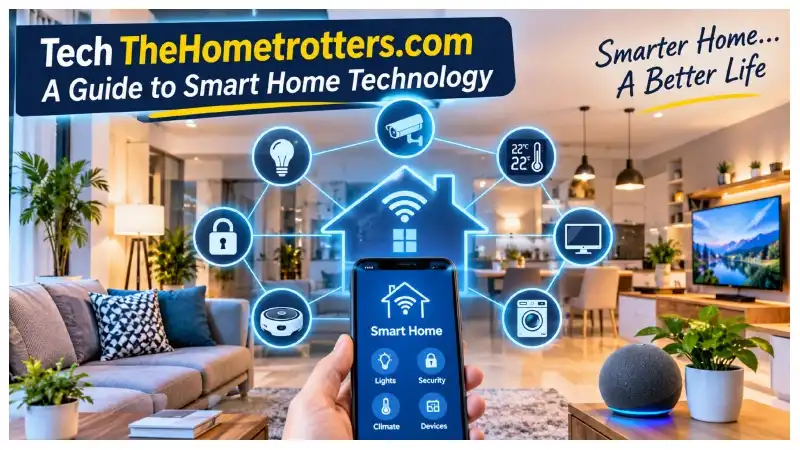
A modern home is becoming more than a place to relax. Technology now helps people manage household tasks, control appliances, improve security, and use energy more carefully. From intelligent door locks to automated cleaning equipment, connected devices are changing how families interact with their living spaces.Tech TheHometrotters.com explores the connection between technology and modern home living. It is a useful subject for readers who want to understand smart home products, discover practical innovations, and learn how digital tools can improve everyday routines.However, a technologically advanced home does not need dozens of expensive gadgets. A few well-chosen products can make a meaningful difference. The key is to understand what each device does, how it connects with other equipment, and whether it solves a genuine household problem.
This guide explains the main features of smart home technology, its practical benefits, potential challenges, and the factors worth considering before investing in connected devices.
Understanding the Growth of Smart Home Technology
Smart home technology refers to electronic equipment that allows people to monitor, control, or automate different household functions. These products often communicate through wireless networks and dedicated applications.
Traditional household equipment usually requires direct interaction. For example, someone must operate a conventional switch to turn on a light. A connected lighting system can perform the same task through a smartphone or an automatic schedule.
Modern smart homes may include:
- Connected lighting and electrical controls.
- Automated cleaning equipment.
- Digital door locks and security sensors.
- Smart kitchen appliances.
- Voice-controlled entertainment systems.
- Heating and cooling management tools.
These technologies serve different purposes, but they share one goal: making household management more convenient.
Smart Devices That Can Improve Everyday Living
1. Automated Cleaning Equipment
Cleaning often takes time, especially in busy households. Robotic vacuum cleaners offer another way to manage routine floor maintenance.
<AsyncImage query=”robot vacuum cleaner navigating bright contemporary home living room floor realistic interior photography” aspectRatio=”16:9″/>
Many models can move around rooms, detect obstacles, and follow programmed cleaning schedules. Some advanced versions also support mapping features, allowing users to select particular rooms through an application.
For example, a homeowner can schedule a robot vacuum to clean the living room while everyone is away. Tech TheHometrotters.com reduces the need to perform the same cleaning task manually every day.
However, these machines still have limitations. They may struggle with stairs, loose cables, thick rugs, or crowded spaces. Regular maintenance also remains necessary.
2. Digital Door Locks and Entry Systems
<AsyncImage query=”modern residential smart digital keypad door lock installed on elegant wooden front door” aspectRatio=”16:9″/>
Traditional keys can become inconvenient when several family members need access to a property. Digital door locks offer alternative entry methods through keypads, mobile applications, or compatible access cards.
Some models allow homeowners to create temporary access codes for guests or service providers. Others provide notifications when someone locks or unlocks the door.
Before choosing a digital lock, check its emergency access options, battery life, installation requirements, and security features. A reliable manual backup can also prove useful if the battery runs out.
3. Smart Plugs and Electrical Management
Smart plugs are among the simpler products available to beginners. They connect compatible electrical appliances to a control system, allowing users to switch power on or off remotely.
For instance, someone might use a smart plug to control a desk lamp or schedule a small household appliance.
Some models also measure electricity consumption, helping users understand how much power connected equipment uses.
Nevertheless, smart plugs have electrical limits. Always check the rated voltage, current, and supported appliance type. Avoid using them with equipment that exceeds their specifications.
4. Intelligent Kitchen Equipment
<AsyncImage query=”modern bright kitchen with smart connected appliances countertop touchscreen oven elegant realistic photography” aspectRatio=”16:9″/>
Technology is also changing the way people prepare and store food. Some modern ovens, refrigerators, and cooking appliances include digital controls and connected features.
A connected oven may let users monitor cooking settings through an application. Certain refrigerators provide temperature alerts, while some cooking devices offer guided preparation programmes.
These functions can be helpful for people with busy schedules. However, good appliance performance should remain the main priority. Buyers should compare capacity, energy use, cleaning requirements, reliability, and repair costs before choosing a connected model.
5. Smart Entertainment and Home Office Equipment
Connected entertainment systems can bring several household activities together. Smart televisions, wireless speakers, streaming devices, and compatible lighting products allow users to create customised entertainment settings.
For example, someone working from home might use wireless speakers for video meetings and a smart display to manage reminders or daily schedules.
The important consideration is network quality. Several connected devices can place additional demands on a home internet connection, especially when they stream high-quality video.
How Different Smart Home Devices Work Together
Individual devices provide useful functions, but their value can increase when compatible products communicate with one another.
A smart home platform acts as a central control point for supported equipment. Users can manage devices through an application, compatible hub, or voice assistant.
Wireless technologies play an important role in Tech TheHometrotters.com process.
Wi-Fi: Connects devices to a home network and often supports remote access.
Bluetooth: Allows nearby devices to communicate without requiring a direct internet connection.
Zigbee: Provides a wireless communication option commonly used by smart home equipment.
Thread: Supports communication between compatible connected devices through a low-power mesh network.
Matter: A connectivity standard designed to improve compatibility among supported smart home products from different manufacturers.
Before purchasing several products, check their compatibility with your preferred platform. A device may offer excellent individual features but still fail to work with equipment you already own.
Practical Benefits of a Connected Home
More Control Over Household Activities
Connected devices give homeowners additional ways to manage their properties. Someone can check a compatible security camera, adjust lighting, or change certain appliance settings without moving from one room to another.
Improved Daily Organisation
Automatic schedules help reduce repetitive tasks. For example, connected lights can follow a morning routine, while a robotic cleaner can operate at selected times.
Better Energy Awareness
Energy-monitoring plugs and smart climate controls can provide information about electricity use. Tech TheHometrotters.com data may help households identify equipment that consumes unnecessary power.
Actual savings depend on device efficiency, usage patterns, local electricity costs, and household behaviour.
Additional Security Features
Connected sensors and cameras can provide alerts about certain activities around a property. They offer useful monitoring options, although they should support rather than replace basic security measures.
Challenges Homeowners Should Understand
Despite their advantages, smart home products can introduce practical difficulties.
Internet dependence: Some features stop working when the network becomes unavailable. Check whether essential controls can operate locally.
Compatibility issues: Products from different manufacturers may not support the same platforms or communication standards.
Maintenance expenses: Batteries, replacement parts, subscriptions, and repairs can increase long-term ownership costs.
Learning requirements: Some applications and automation settings take time to understand.
Privacy concerns: Connected cameras, microphones, and applications may collect personal information.
Understanding these limitations before buying helps prevent disappointment later.
How to Choose the Right Smart Home Products
The best buying decision starts with your household requirements rather than advertising claims.
First, identify an activity that you want to improve. If you regularly forget to turn off electrical equipment, a compatible smart plug might help. If you want to monitor your front entrance, consider a suitable video doorbell.
Next, compare products from established manufacturers. Read customer feedback, check warranty terms, and investigate the availability of software updates.
Pay attention to the following factors:
- Compatibility with existing equipment.
- Installation and maintenance requirements.
- Privacy and account security features.
- Total purchase and subscription costs.
- Manufacturer support and warranty coverage.
- Manual controls and backup options.
Avoid purchasing devices simply because they have impressive technical specifications. A straightforward product that performs its main function reliably may offer better value than a complicated alternative.
Smart Home Security: Protecting Your Connected Devices
Every internet-connected product needs sensible security practices. Weak passwords or outdated software can expose devices to unnecessary risks.
Homeowners can improve protection by using unique passwords, enabling two-factor authentication, and installing manufacturer updates.
It is also important to secure the household router and review the permissions granted to mobile applications.
When purchasing cameras or voice assistants, understand how recordings and personal information are handled. Check whether the manufacturer provides local storage, cloud storage, or both.
These precautions help users enjoy connected features while reducing avoidable privacy and security problems.
What Is Next for Smart Home Innovation?
Smart home technology continues to develop as manufacturers explore artificial intelligence, improved sensors, and better device communication.
Future products may offer more advanced automation based on household routines. For example, a system could use occupancy information to adjust lighting or provide recommendations about unnecessary electricity consumption.
Manufacturers are also working towards better communication between compatible products. Tech TheHometrotters.com development could make it easier for homeowners to combine equipment from different brands.
For readers interested in Tech TheHometrotters.com, these changes highlight an important trend: home technology is gradually moving towards more connected, adaptable, and user-friendly systems.
Frequently Asked Questions
1. What are the most useful smart home products?
Smart plugs, connected lights, security cameras, digital locks, and robotic vacuum cleaners are useful options. The best choice depends on individual household requirements.
2. Can I create a smart home without replacing existing appliances?
Yes. Compatible smart plugs, lighting products, and other external controls can introduce connected features without replacing every appliance.
3. Do smart home products work with every smartphone?
No. Compatibility varies between manufacturers and applications. Check the supported operating systems before purchasing.
4. Are connected home devices difficult to install?
Many beginner-friendly products offer simple installation instructions. However, electrical equipment and certain security systems may require professional installation.
5. How can I reduce the cost of building a smart home?
Start with one or two useful devices, compare their long-term expenses, and expand gradually. Avoid paying for features you are unlikely to use.
Conclusion
Smart home technology is creating new opportunities to manage household activities with greater flexibility. Automated cleaning equipment, digital locks, connected appliances, and energy-monitoring tools all offer practical ways to improve everyday living.
However, successful home automation depends on selecting reliable products that meet real household needs. Compatibility, privacy, maintenance, and long-term costs deserve attention before making a purchase.
Tech TheHometrotters.com provides an informative starting point for understanding these developments and exploring the relationship between technology and modern homes. With careful planning and sensible product choices, homeowners can build a connected living space that offers convenience without unnecessary complexity.For more information visit our site daily.